Retaining Wall Basics for Sloped Yards: When You Need One & What to Ask a Contractor
Sloped yards can be beautiful—but they can also be challenging to manage. From soil erosion to drainage issues, uneven terrain often creates problems that simple landscaping can’t fix. That’s where retaining walls come in. If you’re wondering whether your property actually needs one, or how to hire the right professional, this guide covers the essentials.
What a Retaining Wall Does (and Why Slopes Are Different)
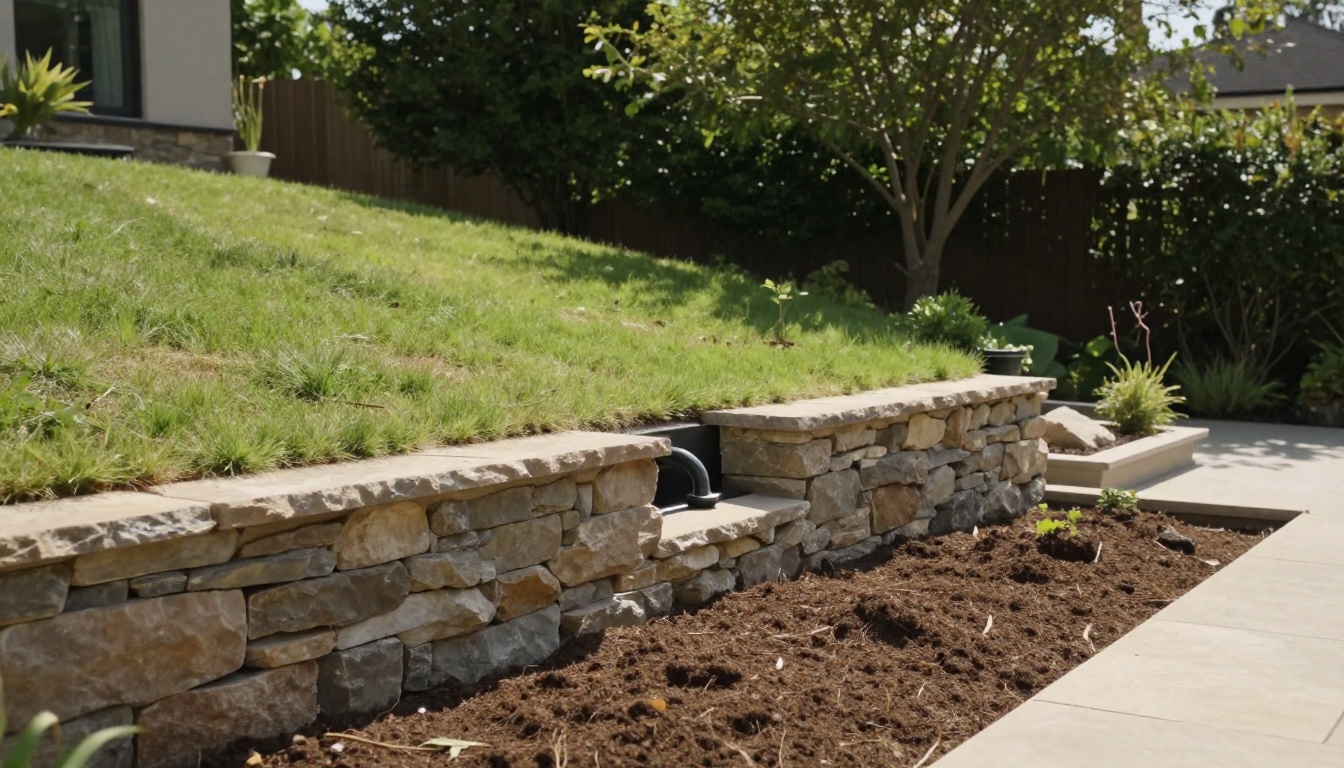
A retaining wall is designed to hold back soil and create stability where natural grades would otherwise shift or erode. On sloped yards, retaining walls do much more than add structure—they protect your property.
Common problems retaining walls solve include:
-
Preventing soil erosion after heavy rain
-
Creating level areas for patios, walkways, or planting beds
-
Managing water runoff and drainage
-
Protecting foundations and hardscapes from shifting soil
In many sloped landscapes, a retaining wall becomes a functional necessity rather than a decorative upgrade. Homeowners planning broader projects often pair walls with hardscaping features to fully stabilize and enhance their outdoor space.
Signs Your Sloped Yard Needs a Retaining Wall
Not every slope requires a wall, but there are clear red flags that indicate it’s time to consider one.
Erosion and Soil Movement
If you notice exposed roots, washed-out mulch, or bare patches forming downhill, your yard is losing soil. Retaining walls—especially professionally designed retaining wall installation services—are built to stop this process before it worsens.
Drainage Problems
Pooling water at the base of a slope or near your home can lead to long-term damage. Retaining walls are often engineered with drainage systems to redirect water safely.
Limited Usable Space
Steep yards can be hard to enjoy. A well-designed wall can create flat, usable zones for seating, gardens, or outdoor living areas—often working alongside landscape design and build services for a cohesive result.
Types of Retaining Walls for Sloped Yards
Choosing the right wall depends on slope severity, soil conditions, and overall design goals.
Segmental Block Retaining Walls
These are among the most popular options for residential properties. They’re durable, flexible, and ideal for moderate slopes. Many homeowners opt for professionally engineered retaining wall installation in Chicago when using segmental systems.
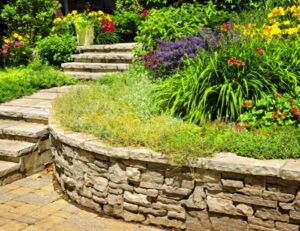
Natural Stone or Flagstone Walls
For a more natural look, stone walls blend beautifully into landscaped yards. They’re often paired with natural flagstone installation to maintain a consistent aesthetic.
Tiered Retaining Walls
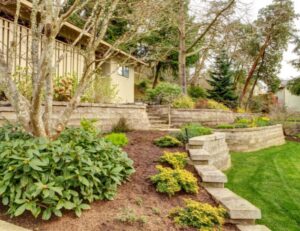
On steep slopes, one tall wall may not be practical. Tiered retaining walls break the slope into levels, improving stability while creating visually appealing terraces for plants or seating.
When a Retaining Wall Becomes a Structural Requirement
In some cases, a retaining wall isn’t optional—it’s required to protect structures or meet safety standards.
Situations where professional evaluation is critical include:
-
Slopes near driveways, patios, or foundations
-
Yards adjacent to neighboring properties
-
Large elevation changes or unstable soil conditions
Experienced contractors who handle professional retaining wall installation can determine whether engineering or permits are needed before construction begins.
What to Ask a Retaining Wall Contractor Before Hiring
Hiring the right contractor is just as important as choosing the right wall type. Asking the right questions upfront helps avoid costly mistakes.
1. How Will Drainage Be Handled?
Improper drainage is one of the most common causes of wall failure. A qualified contractor should explain how water will be redirected behind and around the wall.
2. Is Engineering Required for My Yard?
For taller walls or steep slopes, engineering may be necessary. Contractors experienced in retaining wall installation services can guide you through this process.
3. What Materials Do You Recommend—and Why?
Different soils and slopes require different materials. Whether it’s concrete block, stone, or modular systems, the recommendation should be based on function—not just appearance.
4. How Will the Wall Integrate With My Landscape?
A retaining wall should complement the rest of your property. Many homeowners combine wall projects with residential landscaping or hardscape contractors to ensure everything works together seamlessly.
How Retaining Walls Fit Into Larger Landscaping Plans
Retaining walls are often the foundation of larger outdoor projects. Once slopes are stabilized, homeowners can add patios, walkways, or planting beds with confidence.
Walls are frequently installed alongside:
-
Patio installation projects
-
Walkways and outdoor steps
Planning the wall first ensures every future improvement rests on solid ground.
TL;DR / Key Takeaways
-
Retaining walls are essential for many sloped yards to prevent erosion and manage drainage
-
Signs you need one include soil movement, water pooling, and limited usable space
-
Wall type depends on slope severity, soil conditions, and design goals
-
Always ask contractors about drainage, engineering, materials, and integration
-
Retaining walls often serve as the base for larger landscaping and hardscaping projects