A gravel walkway looks simple, but it behaves like a working surface. It has to stay in place, drain well, feel stable underfoot, and still look good after a season of rain, heat, and foot traffic.
If you’ve ever watched your “nice new” gravel path spread into the lawn, collect puddles, or turn into a rutty mess, the problem usually isn’t gravel in general. It’s the wrong gravel type, the wrong size, or the wrong base (sometimes all three).
Below is a practical way to choose gravel that holds up for homes, businesses, and everything in between.
Start with how the path will be used (and abused)
 Photo by Jonathan Cooper
Before you pick a color or a stone name, decide what the path needs to handle.
Foot traffic level matters. A quiet side-yard path can use a more decorative gravel. A front walk to the door, a route to a dumpster enclosure, or a busy office entrance needs a gravel that compacts and stays put.
Also think about who’s walking on it. If guests will wear heels, if snow shovels will scrape it, or if carts and wheelbarrows will roll over it, you’ll want a firmer, more locked-in surface.
Finally, look at the path’s shape. Curves and slopes look great, but they increase gravel movement. The steeper the grade, the more you’ll benefit from angular gravel, strong edging, and a well-built base.
The two gravel traits that make or break a long-lasting walkway
Angular vs. rounded: the “marbles vs. puzzle pieces” test
Rounded stones (like pea gravel) feel nice underfoot, but they roll. Picture marbles on a hard floor.
Angular stones have edges that bite and interlock when compacted. Think puzzle pieces. For most long-term walkways, angular gravel wins for stability.
Size and “fines”: the secret to a firm surface
Gravel for walkways is usually strongest when it includes a mix of sizes, including small particles called fines. Fines fill gaps between larger stones, which helps the surface tighten up instead of shifting.
As a simple rule:
- Too large and it feels uneven to walk on.
- Too small and it can migrate, clog, or get muddy without a good base.
- A graded mix (stone plus fines) compacts best for high-traffic paths.
Gravel options for walkway paths (what lasts, what spreads)
Not every “gravel” product is the same. Here’s how the most common choices behave on real walkways.
| Gravel type | What it’s like underfoot | Best for | Watch-outs |
|---|---|---|---|
| Pea gravel | Smooth, comfortable | Low-traffic garden paths | Rolls and kicks out without strong edging |
| Crushed stone (with fines) | Firm and compactable | Main walkways, high-traffic areas | Dusty during install, color varies by quarry |
| Decomposed granite (DG) | Natural, almost “packed soil” feel | Modern paths, tight joints, clean look | Needs proper compaction and edging, can track if loose |
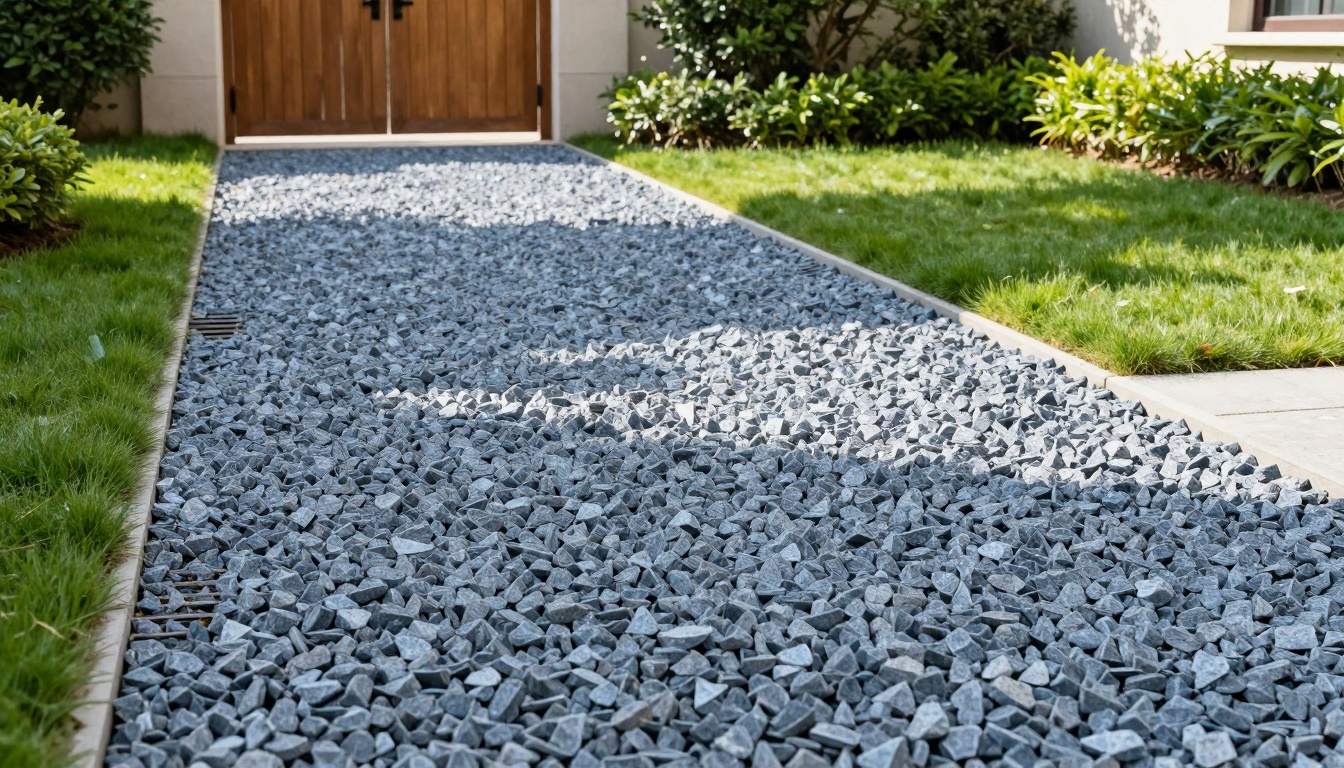
| Crushed granite chips | Crisp look, good drainage | Decorative paths with good containment | Can shift if the base is soft |
| Limestone screenings or similar fines-heavy products | Very firm when compacted | Durable, practical walkways | Can crust or hold water if graded poorly |
If you’re stuck between a few options, compare how each behaves when compacted. Many contractors prefer angular materials for stability, and exploring gravel options can help you match looks with performance.
Build it like a walkway, not like a rock pile
Good gravel is only half the job. The other half is structure. This is where long-lasting paths are won.
1) Excavate enough depth for the base
If you spread gravel over grass or topsoil, it’ll sink and spread. Soil moves. Water moves. Freeze-thaw cycles in places like Chicagoland push and pull surfaces all year.
A typical long-lasting gravel walkway uses:
- A compacted base layer (often crushed stone)
- A top layer that’s comfortable to walk on and easy to refresh
2) Use a separator fabric to stop sinking and mixing
A quality landscape fabric (geotextile) separates soil from stone. It helps the base stay thick instead of disappearing into the dirt over time.
Fabric isn’t magic, but it’s a strong “insurance policy” against mud migration and weeds pushing up through the base.
3) Pick edging that matches the gravel you chose
Edging is the guardrail that keeps gravel where it belongs. Without it, even the best gravel will creep outward with every step.
Good edging options include:
- Steel edging for clean lines and tight control
- Aluminum edging for curves
- Concrete or stone edging when you want a heavier border
If you’re set on pea gravel, treat edging as non-negotiable.
4) Get the layer thickness right
Walkways fail when the base is too thin or the top layer is too thick.
A common approach:
- Base: compactable crushed stone (thicker than the top layer)
- Top: a thinner layer of your chosen “finish” gravel
When the surface layer gets deep and loose, it starts behaving like a beach. Comfortable at first, then frustrating fast.
5) Plan for drainage, even when the yard looks flat
A gravel walkway should shed water, not hold it. A slight crown (higher in the middle) or a gentle slope to one side moves water off the walking surface.
If puddles form, gravel can settle into them and make a low spot even worse. That’s when you get the “always wet, always weedy” section of path.
For patios and paths where you want gravel to stay locked in place, systems that stabilize gravel can also help.
Choosing gravel color and style without creating a maintenance headache
Color is personal, but it also affects how the walkway ages.
Mid-tone blends (tan, gray mix) hide dirt and leaf stains better than bright white stone. Very light gravel can look sharp, but it shows everything and can glare in full sun.
Texture matters too. Sharp-edged gravel compacts well, but extremely sharp stone can be unpleasant for barefoot areas. If the path leads to a pool or patio where people may be barefoot, ask for a stone that’s angular but not razor-sharp.
Maintenance tips that keep a gravel walkway looking new
A gravel walkway doesn’t need constant attention, but it does need the right kind of upkeep.
Top-offs are normal. Even well-built paths lose a bit over time, especially at edges and turning points.
A simple routine helps:
- Rake stray gravel back into place before it spreads into turf.
- Add a thin refresh layer when you see bare spots.
- Keep leaves from matting into the surface (it turns into soil).
- Spot-treat weeds early, before roots loosen your base.
In winter, use a shovel with a flat edge and avoid aggressive scraping that pulls stone into the yard. If you need melt products, follow manufacturer guidance for nearby plants and concrete.
When it’s worth calling a pro
If the path crosses soft soil, runs along a slope, or needs to look sharp at a business entrance, installation details matter as much as the gravel choice. A professional crew can grade for drainage, compact in lifts, and set edging so the walkway stays crisp instead of wandering.
That’s also when you can tie the walkway into other upgrades, like stepping-stone landings, paver borders, or a full hardscape refresh.
Conclusion
A gravel path that lasts isn’t about buying the prettiest stone. It’s about choosing gravel that matches traffic, compacts well, and stays contained with a solid base and edging. When you get those pieces right, your gravel walkway stops acting like loose rock and starts acting like a finished outdoor feature. If you want a path that looks good in year one and year ten, start with structure, then pick the gravel that fits it.